


Overview
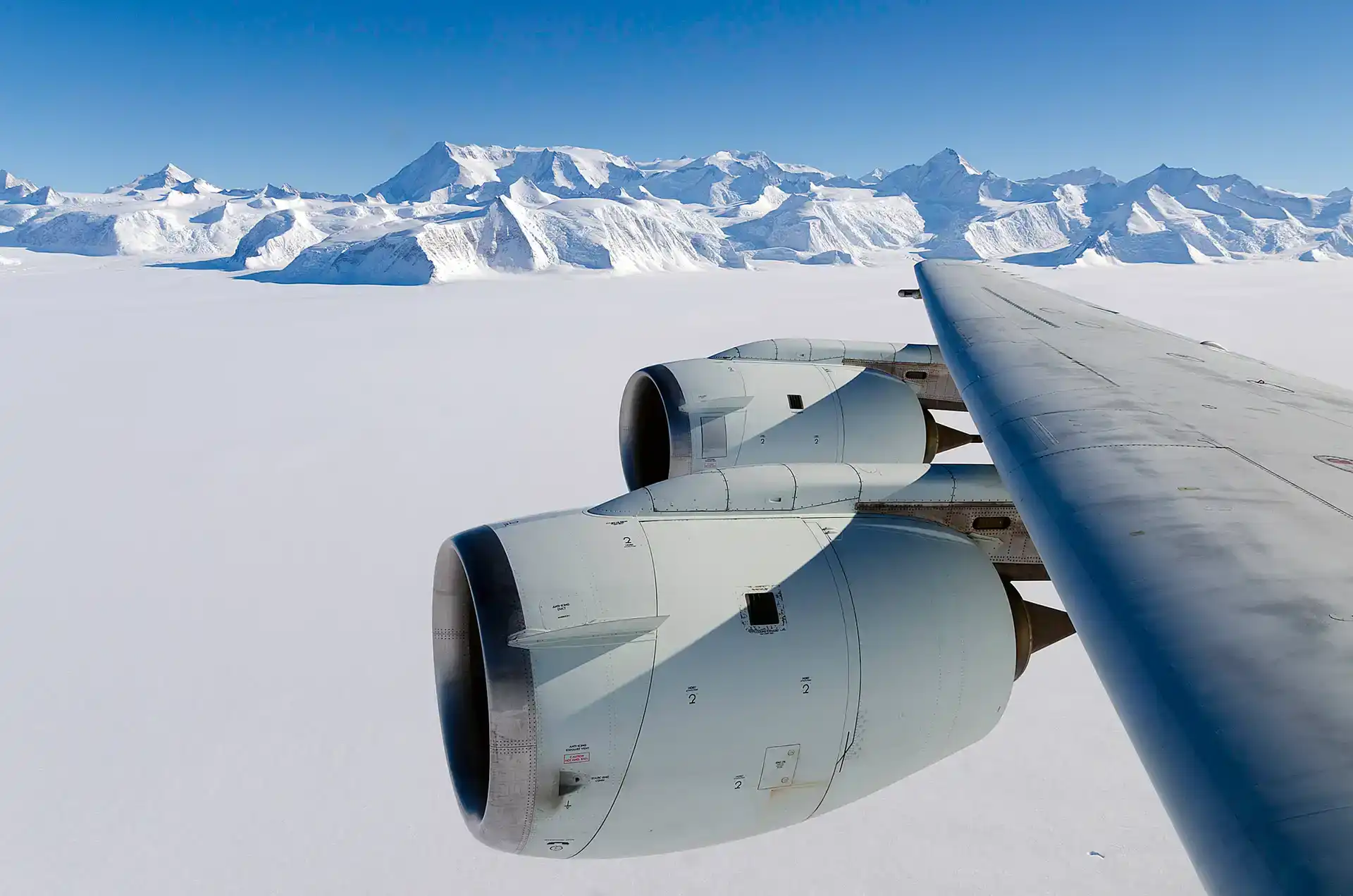
The C-23 Sherpa is a two-engine turboprop aircraft owned and operated by NASA Wallops Flight Facility (WFF). It is mainly used for airborne science research, logistical support for various NASA investigations, and testing new airborne instruments. The C-23 Sherpa has a maximum altitude of 20,000 feet, a maximum payload of 7,000 pounds, and a maximum flight time of 5 hours.
Online information
Related Campaigns & Instruments
Review the instruments operated on this platform for each of these field campaigns
Slide 1 of 4


Carbon in Arctic Reservoirs Vulnerability Experiment
2012—2015
Alaska
view all deployment dates
4 Deployments
· 26 Data Products| 2012-05-23 | 2012-10-30 |
| 2013-02-05 | 2013-11-25 |
| 2015-02-10 | 2015-11-12 |
| 2014-02-13 | 2014-11-09 |
The Fourier Transform Spectrometer (FTS) is a high-resolution spectrometer used in both airborne and ground-based applications. FTS measures the solar radiance reflected from surfaces, which can be used to estimate atmospheric concentrations of carbon monoxide (CO), carbon dioxide (CO2), and methane (CH4). It provides a spatial resolution of approximately 100m by 1000m and operates at a measurement frequency of 1 Hz during typical research flights.
Earth Science > Atmosphere > Atmospheric Chemistry > Carbon And Hydrocarbon Compounds > Methane
Earth Science > Atmosphere > Atmospheric Chemistry > Carbon And Hydrocarbon Compounds > Carbon Dioxide
Earth Science > Atmosphere > Atmospheric Chemistry > Carbon And Hydrocarbon Compounds > Carbon Monoxide
Earth Science > Atmosphere > Atmospheric Chemistry > Trace Gases/trace Species
Earth Science > Atmosphere > Atmospheric Chemistry
Earth Science > Atmosphere > Atmospheric Radiation > Solar Irradiance
Earth Science > Atmosphere > Atmospheric Radiation
The Picarro gas concentration analyzer is an in situ airborne or ground-based sensor manufactured by Picarro, Inc. It uses Wavelength-Scanned Cavity Ring Spectroscopy (WS-CRDS) to measure trace gases such as carbon dioxide, carbon monoxide, methane, and water vapor. For carbon dioxide measurements, the laser operates at 1603 nm, while 1651 nm is used for methane and water vapor measurements. Picarro has a typical sampling time of 2.5 seconds. Depending on the model, Picarro can also provide measurements of carbon isotopes in gas concentrations.
Earth Science > Atmosphere > Atmospheric Chemistry > Carbon And Hydrocarbon Compounds > Methane
Earth Science > Atmosphere > Atmospheric Chemistry > Carbon And Hydrocarbon Compounds > Carbon Monoxide
Earth Science > Atmosphere > Atmospheric Chemistry > Carbon And Hydrocarbon Compounds > Carbon Dioxide
Earth Science > Atmosphere > Atmospheric Chemistry > Nitrogen Compounds > Ammonia
Earth Science > Atmosphere > Atmospheric Chemistry > Trace Gases/trace Species
Earth Science > Atmosphere > Atmospheric Chemistry
Earth Science > Atmosphere > Atmospheric Water Vapor > Water Vapor Indicators > Water Vapor
Earth Science > Atmosphere > Atmospheric Chemistry > Nitrogen Compounds > Nitrogen Dioxide
Earth Science > Atmosphere > Atmospheric Chemistry > Nitrogen Compounds > Nitrous Oxide
The Passive Active L- and S-band Sensor (PALS) is a combined airborne polarimetric radiometer and radar developed by NASA’s Jet Propulsion Laboratory (JPL). It was designed to assess the advantages of integrating passive and active remote sensors for measuring ocean salinity and soil moisture. Both the radiometer and radar in PALS operate across the L-band (1.41 GHz, 1.26 GHz) and S-band (2.69 GHz, 3.15 GHz) to measure brightness temperature and radar backscatter related to ocean salinity and soil moisture. Depending on the aircraft's altitude, PALS has a spatial resolution ranging from 600 to 1500 meters. Its design enables installation on various aircraft and is typically used to validate observations from the Aquarius and SMAP satellites.
Earth Science > Land Surface > Soils > Soil Moisture/water Content
Earth Science > Oceans > Salinity/density > Salinity
Earth Science > Spectral/engineering > Radar > Radar Backscatter
Earth Science > Spectral/engineering > Microwave > Brightness Temperature
Earth Science > Spectral/engineering > Radar > Radar Cross-section
The Forward Looking InfraRed (FLIR) imaging camera is an airborne infrared camera that measures radiance and produces thermal images. It is used to analyze the thermal properties of various land surfaces, including vegetation, water, snow, and soil. FLIR operates within the 8-12 μm spectral range. At an altitude of 600 meters above ground level, it has a field of view of 110 meters by 30 meters.
Earth Science > Spectral/engineering > Infrared Wavelengths > Infrared Radiance
Earth Science > Spectral/engineering > Infrared Wavelengths > Infrared Imagery
The Programmable Flask Package (PFP) is an airborne whole-air sampler that includes twelve glass flasks for collecting air samples. These samples are analyzed to monitor chemical species such as carbon monoxide, carbon dioxide, methane, nitrous oxide, hydrocarbons, and chlorofluorocarbons. Each flask is sampled for about 2 minutes and then pressurized to 40 PSI. PFP can also be used for surface-based whole-air sampling.
Earth Science > Atmosphere > Atmospheric Chemistry > Carbon And Hydrocarbon Compounds > Methane
Earth Science > Atmosphere > Atmospheric Chemistry > Carbon And Hydrocarbon Compounds > Carbon Dioxide
Earth Science > Atmosphere > Atmospheric Chemistry > Halocarbons And Halogens > Hydrofluorocarbons
Earth Science > Atmosphere > Atmospheric Chemistry > Sulfur Compounds > Carbonyl Sulfide
Earth Science > Atmosphere > Atmospheric Chemistry > Halocarbons And Halogens > Hydrochlorofluorocarbons
Earth Science > Atmosphere > Atmospheric Chemistry > Nitrogen Compounds > Nitrous Oxide
Earth Science > Atmosphere > Atmospheric Chemistry > Halocarbons And Halogens > Chlorofluorocarbons
Earth Science > Atmosphere > Atmospheric Chemistry > Trace Gases/trace Species
Earth Science > Atmosphere > Atmospheric Chemistry
Earth Science > Atmosphere > Atmospheric Chemistry > Carbon And Hydrocarbon Compounds > Carbon Monoxide
Earth Science > Atmosphere > Atmospheric Chemistry > Halocarbons And Halogens
Earth Science > Atmosphere > Atmospheric Chemistry > Carbon And Hydrocarbon Compounds
Digital cameras provide imagery for research applications. Cameras are mounted on aircraft to collect aerial imagery for mapping and surveying, environmental monitoring, cloud observations, agriculture, geological studies, and other Earth science applications. They are also deployed at field sites to capture visual observations that monitor changes in land cover, vegetation, clouds, air quality, glaciers, and other phenomena.
Earth Science > Spectral/engineering > Visible Wavelengths > Visible Imagery
Video cameras capture footage of various phenomena for research. They are used on aircraft to provide continuous views of weather and terrain below the flight path. Video cameras are also employed to verify the aircraft's flight track. Additionally, they are deployed at field sites to monitor changes in vegetation, land cover, clouds, air quality, glaciers, and other Earth science phenomena.
Earth Science > Spectral/engineering > Visible Wavelengths > Visible Imagery


Ozone Water-Land Environmental Transition Study
2017—2018
Chesapeake Bay
view all deployment dates
2 Deployments
· 12 Data Products| 2017-07-05 | 2017-08-24 |
| 2018-05-08 | 2018-07-19 |
The Compact Airborne Formaldehyde Experiment (CAFE) is an in situ airborne instrument that measures formaldehyde (CH2O). It uses non-resonant laser-induced fluorescence (LIF) to measure CH2O in the troposphere and lower stratosphere. CAFE uses a 355 nm laser to excite CH2O and detect its fluorescence between 420 and 550 nm. It has a typical sampling rate of 1 Hz and achieves a precision of 160 pptv at zero pptv CH2O.
Earth Science > Atmosphere > Atmospheric Chemistry > Carbon And Hydrocarbon Compounds > Formaldehyde
Earth Science > Atmosphere > Atmospheric Chemistry
Generic-Chemistry Related Sensors (Gen-Chemistry) refers to non-specific instruments on a platform used for atmospheric chemistry measurements. These are typically in situ analyzers that measure chemical compounds such as trace gases, halocarbons, volatile organic compounds, nitrates, aerosols, and other chemical species. Measurements can include mixing ratios, composition, particle size, optical properties, and particle size distribution.
Earth Science > Atmosphere > Atmospheric Chemistry > Trace Gases/trace Species
Earth Science > Atmosphere > Atmospheric Chemistry
Earth Science > Atmosphere > Air Quality > Volatile Organic Compounds
Earth Science > Atmosphere > Aerosols
Earth Science > Atmosphere > Aerosols > Aerosol Particle Properties
Earth Science > Atmosphere > Atmospheric Chemistry > Halocarbons And Halogens
Earth Science > Atmosphere > Air Quality
Earth Science > Atmosphere > Atmospheric Chemistry > Carbon And Hydrocarbon Compounds
The LI-COR Quantum Sensor is a ground-based, in situ radiation sensor manufactured by LI-COR. It collects precise measurements of photosynthetically active radiation (PAR) beneath vegetation or under artificial light sources. The sensor detects radiation within the same light spectrum (400 - 700 nm) that plants use for photosynthesis. While primarily used for ground-based measurements, the LI-COR Quantum Sensor can also be mounted on aircraft. It is suitable for long-term deployments and remains durable in high temperatures and humidity.
Earth Science > Biosphere > Vegetation > Photosynthetically Active Radiation
Earth Science > Biosphere > Vegetation
Gas Chromatography/Mass Spectrometry (GC-MS) is an in situ measurement technique used to analyze volatile organic compounds (VOCs) in the atmosphere. It employs gas chromatography to separate the components of an air sample and mass spectrometry to ionize, identify, and quantify gas species. GC-MS is utilized to detect VOCs, halocarbons, hydrocarbons, and other pollutants. It can be applied in ground-based or airborne operations.
Earth Science > Atmosphere > Atmospheric Chemistry > Carbon And Hydrocarbon Compounds > Non-methane Hydrocarbons/volatile Organic Compounds
Earth Science > Atmosphere > Atmospheric Chemistry > Halocarbons And Halogens > Halocarbons
Earth Science > Atmosphere > Atmospheric Chemistry > Trace Gases/trace Species
Earth Science > Atmosphere > Atmospheric Chemistry
Earth Science > Atmosphere > Air Quality > Volatile Organic Compounds
Earth Science > Atmosphere > Atmospheric Chemistry > Halocarbons And Halogens
Earth Science > Atmosphere > Atmospheric Chemistry > Carbon And Hydrocarbon Compounds
The Integrated Cavity Output Spectrometer (ICOS) is an airborne in situ spectrometer developed by Harvard University. It is a mid-infrared (6.7 μm) spectrometer that measures the primary isotopologues of water vapor in the upper troposphere and lower stratosphere. It has been integrated onto NASA’s WB-57 aircraft for field investigations of water vapor. It has an average data acquisition rate of 1 Hz and a measurement precision of 0.14 ppbv for water vapor in 4-second averages.
Earth Science > Atmosphere > Atmospheric Water Vapor > Water Vapor Indicators > Water Vapor
Earth Science > Atmosphere > Atmospheric Water Vapor
Generic-Atmospheric State (Gen-AtmsState) refers to non-specific instruments on a platform that measure atmospheric state parameters. These are typically in situ sensors that measure temperature, pressure, humidity, and wind speed and direction. Types of atmospheric state instruments include thermometers, hygrometers, barometers, and anemometers.
Earth Science > Atmosphere > Atmospheric Water Vapor
Earth Science > Atmosphere > Atmospheric Pressure
Earth Science > Atmosphere > Atmospheric Water Vapor > Water Vapor Indicators > Humidity
Earth Science > Atmosphere > Atmospheric Temperature > Surface Temperature > Air Temperature
Earth Science > Atmosphere > Atmospheric Winds > Upper Level Winds > Wind Direction
Earth Science > Atmosphere > Atmospheric Winds > Upper Level Winds > Wind Speed
Earth Science > Atmosphere > Atmospheric Pressure > Atmospheric Pressure Measurements
Earth Science > Atmosphere > Atmospheric Winds > Surface Winds > Wind Direction
Earth Science > Atmosphere > Atmospheric Temperature
Earth Science > Atmosphere > Atmospheric Winds > Surface Winds > Wind Speed
Earth Science > Atmosphere > Atmospheric Winds
The Whole Air Sampler (WAS) is an airborne in situ instrument that collects air samples for analyzing trace gases, including nonmethane hydrocarbons (NMHCs), halocarbons, alkyl nitrates, and various sulfur compounds in the troposphere. Air samples collected by the WAS are then analyzed using gas chromatography and mass spectrometry to identify the gases present. The WAS collects samples every minute, allowing scientists to obtain a clear picture of the environment's chemical composition as research aircraft pass through.
Earth Science > Atmosphere > Atmospheric Chemistry > Carbon And Hydrocarbon Compounds > Non-methane Hydrocarbons/volatile Organic Compounds
Earth Science > Atmosphere > Atmospheric Chemistry > Sulfur Compounds > Dimethyl Sulfide
Earth Science > Atmosphere > Atmospheric Chemistry > Halocarbons And Halogens > Halocarbons
Earth Science > Atmosphere > Atmospheric Chemistry > Sulfur Compounds > Carbonyl Sulfide
Earth Science > Atmosphere > Aerosols > Nitrate Particles
Earth Science > Atmosphere > Atmospheric Chemistry > Trace Gases/trace Species
Earth Science > Atmosphere > Atmospheric Chemistry
Earth Science > Atmosphere > Atmospheric Chemistry > Sulfur Compounds
Earth Science > Atmosphere > Atmospheric Chemistry > Halocarbons And Halogens
Earth Science > Atmosphere > Atmospheric Chemistry > Carbon And Hydrocarbon Compounds
NOx/NOxy is an in situ chemiluminescence instrument that measures nitrogen oxides and ozone in the atmosphere. It provides spatial resolution better than 100 meters at typical DC-8 research-flight speeds. NOx/NOxy can be deployed on ground-based, airborne, and shipborne platforms, supporting a range of atmospheric chemistry and air quality studies.
Earth Science > Atmosphere > Atmospheric Chemistry > Nitrogen Compounds > Nitrogen Oxides
Earth Science > Atmosphere > Atmospheric Chemistry > Nitrogen Compounds > Nitrogen Dioxide
Earth Science > Atmosphere > Atmospheric Chemistry > Nitrogen Compounds > Nitric Oxide
Earth Science > Atmosphere > Atmospheric Chemistry > Oxygen Compounds > Ozone
Earth Science > Atmosphere > Atmospheric Chemistry > Nitrogen Compounds
Earth Science > Atmosphere > Atmospheric Chemistry
Earth Science > Atmosphere > Air Quality > Nitrogen Oxides
The Los Gatos Research (LGR) Greenhouse Gas Analyzer (GGA) is a portable analyzer suitable for in situ measurements, either airborne or ground-based. It uses off-axis integrated cavity output spectroscopy (OA-ICOS) to simultaneously measure methane (CH4), carbon dioxide (CO2), and water vapor (H2O). It can detect CH4 up to 100 ppm, CO2 up to 20,000 ppm, and H2O up to 30,000 ppm. The device offers a selectable measurement rate from 0.01 to 1 Hz, with some models featuring a fast-flow option that supports rates up to 10 Hz.
Earth Science > Atmosphere > Atmospheric Chemistry > Carbon And Hydrocarbon Compounds > Methane
Earth Science > Atmosphere > Atmospheric Chemistry > Carbon And Hydrocarbon Compounds > Carbon Dioxide
Earth Science > Atmosphere > Atmospheric Water Vapor
Earth Science > Atmosphere > Atmospheric Chemistry > Trace Gases/trace Species
Earth Science > Atmosphere > Atmospheric Chemistry
The Geostationary Trace gas and Aerosol Sensor Optimization (GeoTASO) is an airborne pushbroom spectrometer developed by Ball Aerospace with support from NASA’s Earth Science Technology Office. GeoTASO measures nadir backscattered solar radiation in the ultraviolet (290-400 nm) and visible (415-695 nm) spectral ranges. These measurements can be used to determine atmospheric aerosols and trace gases, including ozone, formaldehyde, and nitrogen dioxide. GeoTASO has a spatial resolution of approximately 250 m by 250 m and an integration time of 0.25 seconds.
Earth Science > Atmosphere > Atmospheric Chemistry > Nitrogen Compounds > Nitrogen Dioxide
Earth Science > Spectral/engineering > Visible Wavelengths > Visible Radiance
Earth Science > Spectral/engineering > Ultraviolet Wavelengths > Ultraviolet Radiance
Earth Science > Atmosphere > Atmospheric Chemistry > Carbon And Hydrocarbon Compounds > Formaldehyde
Earth Science > Atmosphere > Atmospheric Chemistry > Trace Gases/trace Species
Earth Science > Atmosphere > Atmospheric Chemistry
Earth Science > Atmosphere > Aerosols
Earth Science > Atmosphere > Atmospheric Chemistry > Oxygen Compounds > Ozone
Earth Science > Atmosphere > Atmospheric Chemistry > Sulfur Compounds > Sulfur Dioxide
CARAFE
NASA Carbon Atmospheric Flux Experiment
2016—2017
Eastern United States Coast, Mid-Atlantic Region
view all deployment dates
2 Deployments
· 1 Data Product| 2017-05-03 | 2017-05-26 |
| 2016-09-07 | 2016-09-26 |
The Picarro gas concentration analyzer is an in situ airborne or ground-based sensor manufactured by Picarro, Inc. It uses Wavelength-Scanned Cavity Ring Spectroscopy (WS-CRDS) to measure trace gases such as carbon dioxide, carbon monoxide, methane, and water vapor. For carbon dioxide measurements, the laser operates at 1603 nm, while 1651 nm is used for methane and water vapor measurements. Picarro has a typical sampling time of 2.5 seconds. Depending on the model, Picarro can also provide measurements of carbon isotopes in gas concentrations.
Earth Science > Atmosphere > Atmospheric Chemistry > Carbon And Hydrocarbon Compounds > Methane
Earth Science > Atmosphere > Atmospheric Chemistry > Carbon And Hydrocarbon Compounds > Carbon Monoxide
Earth Science > Atmosphere > Atmospheric Chemistry > Carbon And Hydrocarbon Compounds > Carbon Dioxide
Earth Science > Atmosphere > Atmospheric Chemistry > Nitrogen Compounds > Ammonia
Earth Science > Atmosphere > Atmospheric Chemistry > Trace Gases/trace Species
Earth Science > Atmosphere > Atmospheric Chemistry
Earth Science > Atmosphere > Atmospheric Water Vapor > Water Vapor Indicators > Water Vapor
Earth Science > Atmosphere > Atmospheric Chemistry > Nitrogen Compounds > Nitrogen Dioxide
Earth Science > Atmosphere > Atmospheric Chemistry > Nitrogen Compounds > Nitrous Oxide
The LI-COR Quantum Sensor is a ground-based, in situ radiation sensor manufactured by LI-COR. It collects precise measurements of photosynthetically active radiation (PAR) beneath vegetation or under artificial light sources. The sensor detects radiation within the same light spectrum (400 - 700 nm) that plants use for photosynthesis. While primarily used for ground-based measurements, the LI-COR Quantum Sensor can also be mounted on aircraft. It is suitable for long-term deployments and remains durable in high temperatures and humidity.
Earth Science > Biosphere > Vegetation > Photosynthetically Active Radiation
Earth Science > Biosphere > Vegetation
The MicaSense RedEdge is an airborne multispectral camera manufactured by MicaSense, Inc. It operates across five bands (460-860 nm) in the red, green, blue, near-infrared, and red-edge portions of the spectrum, collecting visible and infrared imagery. It is typically used on uncrewed aerial systems (UASs) for vegetation mapping. The MicaSense RedEdge has a ground sample distance of 8.2 cm per pixel (per band) at 120 m above ground level. It captures imagery at 1-second intervals and has a field of view of 47.9 by 36.9 degrees.
Earth Science > Spectral/engineering > Visible Wavelengths > Visible Imagery
Earth Science > Spectral/engineering > Infrared Wavelengths > Infrared Imagery
The Diode Laser Hygrometer (DLH) is an in situ airborne hygrometer developed by NASA’s Langley Research Center (LaRC). It uses tunable diode laser absorption to measure atmospheric water vapor. DLH operates in the near-infrared at around 1.4 μm and has a measurement rate of 100 Hz. It provides accurate water vapor measurements even when flying through clouds.
Earth Science > Atmosphere > Atmospheric Water Vapor
Earth Science > Atmosphere > Atmospheric Water Vapor > Water Vapor Indicators > Water Vapor
Earth Science > Atmosphere > Atmospheric Water Vapor > Water Vapor Indicators > Humidity > Relative Humidity
Earth Science > Atmosphere > Atmospheric Water Vapor > Water Vapor Indicators > Humidity
The Los Gatos Research (LGR) Greenhouse Gas Analyzer (GGA) is a portable analyzer suitable for in situ measurements, either airborne or ground-based. It uses off-axis integrated cavity output spectroscopy (OA-ICOS) to simultaneously measure methane (CH4), carbon dioxide (CO2), and water vapor (H2O). It can detect CH4 up to 100 ppm, CO2 up to 20,000 ppm, and H2O up to 30,000 ppm. The device offers a selectable measurement rate from 0.01 to 1 Hz, with some models featuring a fast-flow option that supports rates up to 10 Hz.
Earth Science > Atmosphere > Atmospheric Chemistry > Carbon And Hydrocarbon Compounds > Methane
Earth Science > Atmosphere > Atmospheric Chemistry > Carbon And Hydrocarbon Compounds > Carbon Dioxide
Earth Science > Atmosphere > Atmospheric Water Vapor
Earth Science > Atmosphere > Atmospheric Chemistry > Trace Gases/trace Species
Earth Science > Atmosphere > Atmospheric Chemistry
The Forward Looking InfraRed (FLIR) imaging camera is an airborne infrared camera that measures radiance and produces thermal images. It is used to analyze the thermal properties of various land surfaces, including vegetation, water, snow, and soil. FLIR operates within the 8-12 μm spectral range. At an altitude of 600 meters above ground level, it has a field of view of 110 meters by 30 meters.
Earth Science > Spectral/engineering > Infrared Wavelengths > Infrared Radiance
Earth Science > Spectral/engineering > Infrared Wavelengths > Infrared Imagery
The Turbulent Air Motion Measurement System (TAMMS) is an in situ airborne sensor that collects aircraft navigation data. TAMMS comprises several subsystems, including pressure transducers and temperature sensors, an aircraft inertial navigation system, a central data acquisition system, and water vapor and other gas sensors. It provides measurements of aircraft position, flight-level winds, temperature, pressure, and water vapor. TAMMS has a typical sampling frequency of less than 1 second and a spatial resolution of 5 meters.
Earth Science > Atmosphere > Atmospheric Winds > Upper Level Winds
Earth Science > Atmosphere > Atmospheric Water Vapor
Earth Science > Atmosphere > Atmospheric Pressure
Earth Science > Atmosphere > Atmospheric Water Vapor > Water Vapor Indicators > Water Vapor
Earth Science > Atmosphere > Atmospheric Winds > Upper Level Winds > Wind Direction
Earth Science > Atmosphere > Atmospheric Winds > Upper Level Winds > Wind Speed
Earth Science > Atmosphere > Atmospheric Pressure > Atmospheric Pressure Measurements
Earth Science > Atmosphere > Atmospheric Temperature > Upper Air Temperature
Earth Science > Atmosphere > Atmospheric Winds > Upper Level Winds > Flight Level Winds
Earth Science > Atmosphere > Atmospheric Temperature
Earth Science > Atmosphere > Atmospheric Winds
Rosemount Pressure Probes are in situ airborne pressure sensors manufactured by Rosemount, Inc. They provide high-precision atmospheric pressure measurements and are typically used to collect flight-level meteorological observations. Rosemount Pressure Probes include various pressure transducers, gauges, and multivariable and coplanar transmitters.
Earth Science > Atmosphere > Atmospheric Pressure > Differential Pressure
Earth Science > Atmosphere > Atmospheric Pressure > Atmospheric Pressure Measurements
Earth Science > Atmosphere > Atmospheric Pressure
Rosemount Temperature Probes are in situ airborne temperature sensors manufactured by Rosemount, Inc. They provide atmospheric temperature measurements and are typically used to collect flight-level meteorological observations. Rosemount Temperature Probes consist of temperature transmitters, thermocouple sensors, resistance temperature detectors, and other temperature sensors.
Earth Science > Atmosphere > Atmospheric Temperature > Upper Air Temperature
Earth Science > Atmosphere > Atmospheric Temperature
Digital cameras provide imagery for research applications. Cameras are mounted on aircraft to collect aerial imagery for mapping and surveying, environmental monitoring, cloud observations, agriculture, geological studies, and other Earth science applications. They are also deployed at field sites to capture visual observations that monitor changes in land cover, vegetation, clouds, air quality, glaciers, and other phenomena.
Earth Science > Spectral/engineering > Visible Wavelengths > Visible Imagery
Generic-Atmospheric State (Gen-AtmsState) refers to non-specific instruments on a platform that measure atmospheric state parameters. These are typically in situ sensors that measure temperature, pressure, humidity, and wind speed and direction. Types of atmospheric state instruments include thermometers, hygrometers, barometers, and anemometers.
Earth Science > Atmosphere > Atmospheric Water Vapor
Earth Science > Atmosphere > Atmospheric Pressure
Earth Science > Atmosphere > Atmospheric Water Vapor > Water Vapor Indicators > Humidity
Earth Science > Atmosphere > Atmospheric Temperature > Surface Temperature > Air Temperature
Earth Science > Atmosphere > Atmospheric Winds > Upper Level Winds > Wind Direction
Earth Science > Atmosphere > Atmospheric Winds > Upper Level Winds > Wind Speed
Earth Science > Atmosphere > Atmospheric Pressure > Atmospheric Pressure Measurements
Earth Science > Atmosphere > Atmospheric Winds > Surface Winds > Wind Direction
Earth Science > Atmosphere > Atmospheric Temperature
Earth Science > Atmosphere > Atmospheric Winds > Surface Winds > Wind Speed
Earth Science > Atmosphere > Atmospheric Winds


Student Airborne Research Program
2009—2025
Southern California, Virginia
Ongoing
view all deployment dates
19 Deployments
· 26 Data Products| 2025-06-15 | 2025-08-02 |
| 2025-06-22 | 2025-08-09 |
| 2009-07-12 | 2009-08-13 |
| 2010-06-20 | 2010-07-30 |
| 2011-06-19 | 2011-07-29 |
| 2012-06-17 | 2012-08-10 |
| 2013-06-09 | 2013-08-02 |
| 2014-06-15 | 2014-08-08 |
| 2015-06-14 | 2015-08-07 |
| 2016-06-12 | 2016-08-05 |
| 2017-06-18 | 2017-08-11 |
| 2018-06-18 | 2018-08-10 |
| 2019-06-16 | 2019-08-09 |
| 2021-12-03 | 2021-12-10 |
| 2022-06-12 | 2022-08-05 |
| 2023-06-11 | 2023-08-04 |
| 2023-06-18 | 2023-08-11 |
| 2024-06-16 | 2024-08-09 |
| 2024-06-23 | 2024-08-16 |
Generic-Atmospheric State (Gen-AtmsState) refers to non-specific instruments on a platform that measure atmospheric state parameters. These are typically in situ sensors that measure temperature, pressure, humidity, and wind speed and direction. Types of atmospheric state instruments include thermometers, hygrometers, barometers, and anemometers.
Earth Science > Atmosphere > Atmospheric Water Vapor
Earth Science > Atmosphere > Atmospheric Pressure
Earth Science > Atmosphere > Atmospheric Water Vapor > Water Vapor Indicators > Humidity
Earth Science > Atmosphere > Atmospheric Temperature > Surface Temperature > Air Temperature
Earth Science > Atmosphere > Atmospheric Winds > Upper Level Winds > Wind Direction
Earth Science > Atmosphere > Atmospheric Winds > Upper Level Winds > Wind Speed
Earth Science > Atmosphere > Atmospheric Pressure > Atmospheric Pressure Measurements
Earth Science > Atmosphere > Atmospheric Winds > Surface Winds > Wind Direction
Earth Science > Atmosphere > Atmospheric Temperature
Earth Science > Atmosphere > Atmospheric Winds > Surface Winds > Wind Speed
Earth Science > Atmosphere > Atmospheric Winds
The Compact Airborne Formaldehyde Experiment (CAFE) is an in situ airborne instrument that measures formaldehyde (CH2O). It uses non-resonant laser-induced fluorescence (LIF) to measure CH2O in the troposphere and lower stratosphere. CAFE uses a 355 nm laser to excite CH2O and detect its fluorescence between 420 and 550 nm. It has a typical sampling rate of 1 Hz and achieves a precision of 160 pptv at zero pptv CH2O.
Earth Science > Atmosphere > Atmospheric Chemistry > Carbon And Hydrocarbon Compounds > Formaldehyde
Earth Science > Atmosphere > Atmospheric Chemistry
The Whole Air Sampler (WAS) is an airborne in situ instrument that collects air samples for analyzing trace gases, including nonmethane hydrocarbons (NMHCs), halocarbons, alkyl nitrates, and various sulfur compounds in the troposphere. Air samples collected by the WAS are then analyzed using gas chromatography and mass spectrometry to identify the gases present. The WAS collects samples every minute, allowing scientists to obtain a clear picture of the environment's chemical composition as research aircraft pass through.
Earth Science > Atmosphere > Atmospheric Chemistry > Carbon And Hydrocarbon Compounds > Non-methane Hydrocarbons/volatile Organic Compounds
Earth Science > Atmosphere > Atmospheric Chemistry > Sulfur Compounds > Dimethyl Sulfide
Earth Science > Atmosphere > Atmospheric Chemistry > Halocarbons And Halogens > Halocarbons
Earth Science > Atmosphere > Atmospheric Chemistry > Sulfur Compounds > Carbonyl Sulfide
Earth Science > Atmosphere > Aerosols > Nitrate Particles
Earth Science > Atmosphere > Atmospheric Chemistry > Trace Gases/trace Species
Earth Science > Atmosphere > Atmospheric Chemistry
Earth Science > Atmosphere > Atmospheric Chemistry > Sulfur Compounds
Earth Science > Atmosphere > Atmospheric Chemistry > Halocarbons And Halogens
Earth Science > Atmosphere > Atmospheric Chemistry > Carbon And Hydrocarbon Compounds
The Los Gatos Research (LGR) Greenhouse Gas Analyzer (GGA) is a portable analyzer suitable for in situ measurements, either airborne or ground-based. It uses off-axis integrated cavity output spectroscopy (OA-ICOS) to simultaneously measure methane (CH4), carbon dioxide (CO2), and water vapor (H2O). It can detect CH4 up to 100 ppm, CO2 up to 20,000 ppm, and H2O up to 30,000 ppm. The device offers a selectable measurement rate from 0.01 to 1 Hz, with some models featuring a fast-flow option that supports rates up to 10 Hz.
Earth Science > Atmosphere > Atmospheric Chemistry > Carbon And Hydrocarbon Compounds > Methane
Earth Science > Atmosphere > Atmospheric Chemistry > Carbon And Hydrocarbon Compounds > Carbon Dioxide
Earth Science > Atmosphere > Atmospheric Water Vapor
Earth Science > Atmosphere > Atmospheric Chemistry > Trace Gases/trace Species
Earth Science > Atmosphere > Atmospheric Chemistry
Filter data products from this platform by specific campaigns, instruments, or formats.
Campaigns
CAMPAIGNS▼
Instruments
INSTRUMENTS▼
Formats
FORMATS▼
Generic-Atmospheric State, LI-COR Quantum Sensor, Gas Chromatograph/Mass Spectrometry, Compact Airborne Formaldehyde Experiment, LGR Greenhouse Gas Analyzer, Integrated Cavity Output Spectrometer, Chemiluminescence Instrument, Whole Air Sampler, Geostationary Trace gas and Aerosol Sensor Optimization Spectrometer