Overview
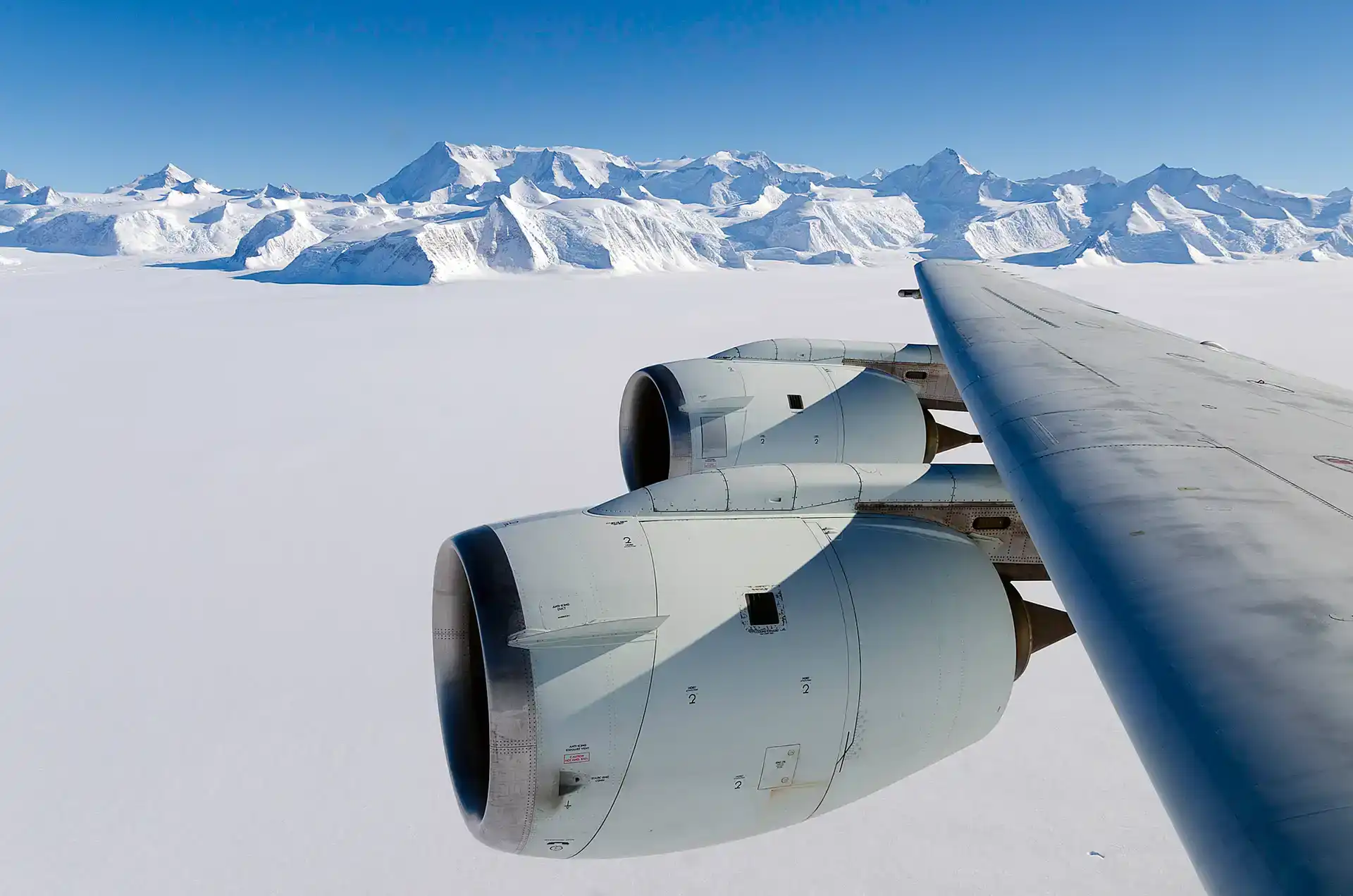
The Gulfstream IV (G-IV) is a high-tech twin-engine jet capable of flying at high speeds and altitudes. NOAA’s Hurricane Research Division uses the aircraft for hurricane research missions because of its ability to easily navigate around and over developing tropical cyclones. NASA also owns and operates its own G-IV for research in the upper atmosphere. The G-IV has a maximum altitude of 45,000 ft, a flight endurance of approximately 8 hours, and can carry payloads up to 5,000 lbs.
Online information
Related Campaigns & Instruments
Review the instruments operated on this platform for each of these field campaigns
Slide 1 of 4

NASA African Monsoon Multidisciplinary Analyses
2006
Cape Verde Islands, Atlantic Ocean
view all deployment dates
1 Deployment
· 22 Data Products| 2006-08-15 | 2006-09-15 |
Dropsondes, also known as dropwindsondes, are in situ instruments designed to be released from aircraft. They are equipped with Global Positioning System (GPS) receivers and sensors to collect profile measurements of pressure, temperature, humidity, wind speed, and wind direction. Dropsondes are important during field investigations because they enable researchers to collect vertical profiles in remote locations and during severe weather conditions. Typically, dropsondes have a vertical resolution of 5 meters and provide wind speed and direction measurements every 0.25 seconds, while temperature, pressure, and humidity are recorded every 0.5 seconds.
Earth Science > Atmosphere > Atmospheric Winds > Wind Profiles
Earth Science > Atmosphere > Atmospheric Pressure
Earth Science > Atmosphere > Atmospheric Winds > Wind Profiles > Wind Velocity/speed Profiles
Earth Science > Atmosphere > Atmospheric Water Vapor > Water Vapor Indicators > Humidity
Earth Science > Atmosphere > Atmospheric Winds > Wind Profiles > Wind Direction Profiles
Earth Science > Atmosphere > Atmospheric Temperature

Coral Reef Airborne Laboratory
2016—2017
Great Barrier Reef, Hawaiian Islands, Florida, Mariana Islands, Palau
view all deployment dates
6 Deployments
· 0 Data Products| 2016-06-06 | 2016-06-26 |
| 2016-09-01 | 2016-10-31 |
| 2017-02-01 | 2017-03-15 |
| 2017-04-03 | 2017-04-28 |
| 2017-05-01 | 2017-05-26 |
| 2017-05-27 | 2017-05-28 |
The Portable Remote Imaging Spectrometer (PRISM) is an airborne push-broom spectrometer developed at Jet Propulsion Laboratory (JPL). PRISM was designed to provide the necessary spectral, spatial, and temporal resolution to characterize events in coastal zones that satellite observations cannot offer. The spectrometer within PRISM operates in the near-ultraviolet to near-infrared range (350-1050 nm) to capture imagery over coastal ocean regions. PRISM also includes a two-channel radiometer operating in the shortwave infrared (1240 and 1640 nm) wavelengths to deliver accurate ocean color measurements. It features a high temporal resolution (167 Hz) and can fly below cloud cover at various altitudes, enabling it to resolve spatial features down to 30 cm.
Earth Science > Oceans > Ocean Optics > Reflectance
Earth Science > Oceans > Ocean Optics
Earth Science > Oceans > Ocean Optics > Ocean Color
Earth Science > Oceans > Ocean Chemistry > Chlorophyll
Earth Science > Oceans > Ocean Optics > Radiance
Earth Science > Oceans > Ocean Chemistry

CalWater
2015
California, Sierra Nevada Range
view all deployment dates
1 Deployment
· 0 Data Products| 2015-01-12 | 2015-03-08 |
The Tail Doppler Radar (TDR) is an airborne vertically scanning, pulse Dopper X-band radar operated by NOAA. It is installed on the tail of the research aircraft and is typically equipped on NOAA’s P-3 aircraft for hurricane and precipitation research missions. TDR measures radar reflectivity and Doppler wind velocities at the 9315 MHz frequency band. It has a horizontal beam width of 1.35 degrees and a range gate spacing of 150 or 300 meters.
Earth Science > Spectral/engineering > Radar > Radial Velocity > Mean Radial Velocity
Earth Science > Spectral/engineering > Radar > Radar Imagery
Earth Science > Spectral/engineering > Radar > Return Power
Earth Science > Spectral/engineering > Radar > Radial Velocity
Earth Science > Spectral/engineering > Radar > Radar Reflectivity
Dropsondes, also known as dropwindsondes, are in situ instruments designed to be released from aircraft. They are equipped with Global Positioning System (GPS) receivers and sensors to collect profile measurements of pressure, temperature, humidity, wind speed, and wind direction. Dropsondes are important during field investigations because they enable researchers to collect vertical profiles in remote locations and during severe weather conditions. Typically, dropsondes have a vertical resolution of 5 meters and provide wind speed and direction measurements every 0.25 seconds, while temperature, pressure, and humidity are recorded every 0.5 seconds.
Earth Science > Atmosphere > Atmospheric Winds > Wind Profiles
Earth Science > Atmosphere > Atmospheric Pressure
Earth Science > Atmosphere > Atmospheric Winds > Wind Profiles > Wind Velocity/speed Profiles
Earth Science > Atmosphere > Atmospheric Water Vapor > Water Vapor Indicators > Humidity
Earth Science > Atmosphere > Atmospheric Winds > Wind Profiles > Wind Direction Profiles
Earth Science > Atmosphere > Atmospheric Temperature
TOST
The Observing system Research and Predictability Experiment (THORPEX) Observing System Test
2003
Pacific Ocean, California, Hawaii (PTOST)
Atlantic Ocean, Eastern United States, Canada (ATOST)
view all deployment dates
2 Deployments
· 1 Data Product| 2003-02-15 | 2003-03-14 |
| 2003-11-06 | 2003-12-17 |
The Precision Radiation Thermometer (PRT-5) is an in situ infrared temperature sensor. It makes non-contact infrared (8-14 μm) temperature measurements between -50 to 150 degrees Celsius with an accuracy of 0.5 degrees Celsius. It has a typical field of view of 2 degrees and a response time of either 0.3 Hz, 3 Hz, or 30 Hz. PRT-5 can be deployed on aircraft, vehicles, research vessels, and other ground-based platforms. It can be used for sea surface, ocean water, cloud, and air temperature measurements.
Earth Science > Oceans > Ocean Temperature > Sea Surface Temperature
Earth Science > Atmosphere > Atmospheric Temperature > Surface Temperature > Air Temperature
Earth Science > Atmosphere > Atmospheric Temperature > Upper Air Temperature
Earth Science > Oceans > Ocean Temperature
Earth Science > Atmosphere > Atmospheric Temperature > Surface Temperature
Earth Science > Atmosphere > Atmospheric Temperature
The Airborne Vertical Atmospheric Profiling System (AVAPS) is a system mounted on aircraft that uses dropsondes and Global Positioning System (GPS) receivers to collect in situ atmospheric profiles. It provides measurements of temperature, pressure, and humidity every 0.5 seconds, and wind data every 0.25 seconds. AVAPS features a vertical resolution of about 10 meters and can launch dropsondes every 20 seconds. Developed by the National Center for Atmospheric Research (NCAR) for the NASA Global Hawk, it can also be used on other aircraft such as the DC-8 and P-3.
Earth Science > Atmosphere > Atmospheric Water Vapor > Water Vapor Indicators > Humidity
Earth Science > Atmosphere > Atmospheric Pressure > Atmospheric Pressure Measurements
Earth Science > Atmosphere > Atmospheric Winds > Wind Profiles
Earth Science > Atmosphere > Atmospheric Pressure
Earth Science > Atmosphere > Atmospheric Winds > Wind Profiles > Wind Velocity/speed Profiles
Earth Science > Atmosphere > Atmospheric Temperature > Upper Air Temperature > Vertical Profiles
Earth Science > Atmosphere > Atmospheric Winds > Wind Profiles > Wind Direction Profiles
Earth Science > Atmosphere > Atmospheric Temperature
Generic-Chemistry Related Sensors (Gen-Chemistry) refers to non-specific instruments on a platform used for atmospheric chemistry measurements. These are typically in situ analyzers that measure various chemical compounds such as trace gases, halocarbons, volatile organic compounds, nitrates, aerosols, and other chemical species. Measurements can include mixing ratio, composition, particle size, optical properties, and particle size distribution.
Earth Science > Atmosphere > Atmospheric Chemistry > Trace Gases/trace Species
Earth Science > Atmosphere > Atmospheric Chemistry
Earth Science > Atmosphere > Air Quality > Volatile Organic Compounds
Earth Science > Atmosphere > Aerosols
Earth Science > Atmosphere > Aerosols > Aerosol Particle Properties
Earth Science > Atmosphere > Atmospheric Chemistry > Halocarbons And Halogens
Earth Science > Atmosphere > Air Quality
Earth Science > Atmosphere > Atmospheric Chemistry > Carbon And Hydrocarbon Compounds
C-band radars operate within the 4-8 GHz frequency range. They provide measurements of radar reflectivity, Doppler velocity, and other parameters to characterize precipitation and clouds. C-band radars are usually used for short-range weather observations because they are more prone to attenuation.
Earth Science > Spectral/engineering > Radar > Doppler Velocity
Earth Science > Spectral/engineering > Radar > Radar Reflectivity
Earth Science > Spectral/engineering > Radar
Earth Science > Spectral/engineering > Radar > Spectrum Width
